
 SAÇ EKİMİ
 MERKEZLERİMİZ
Frequently Asked Questions About FUE and DHI Hair Transplantation
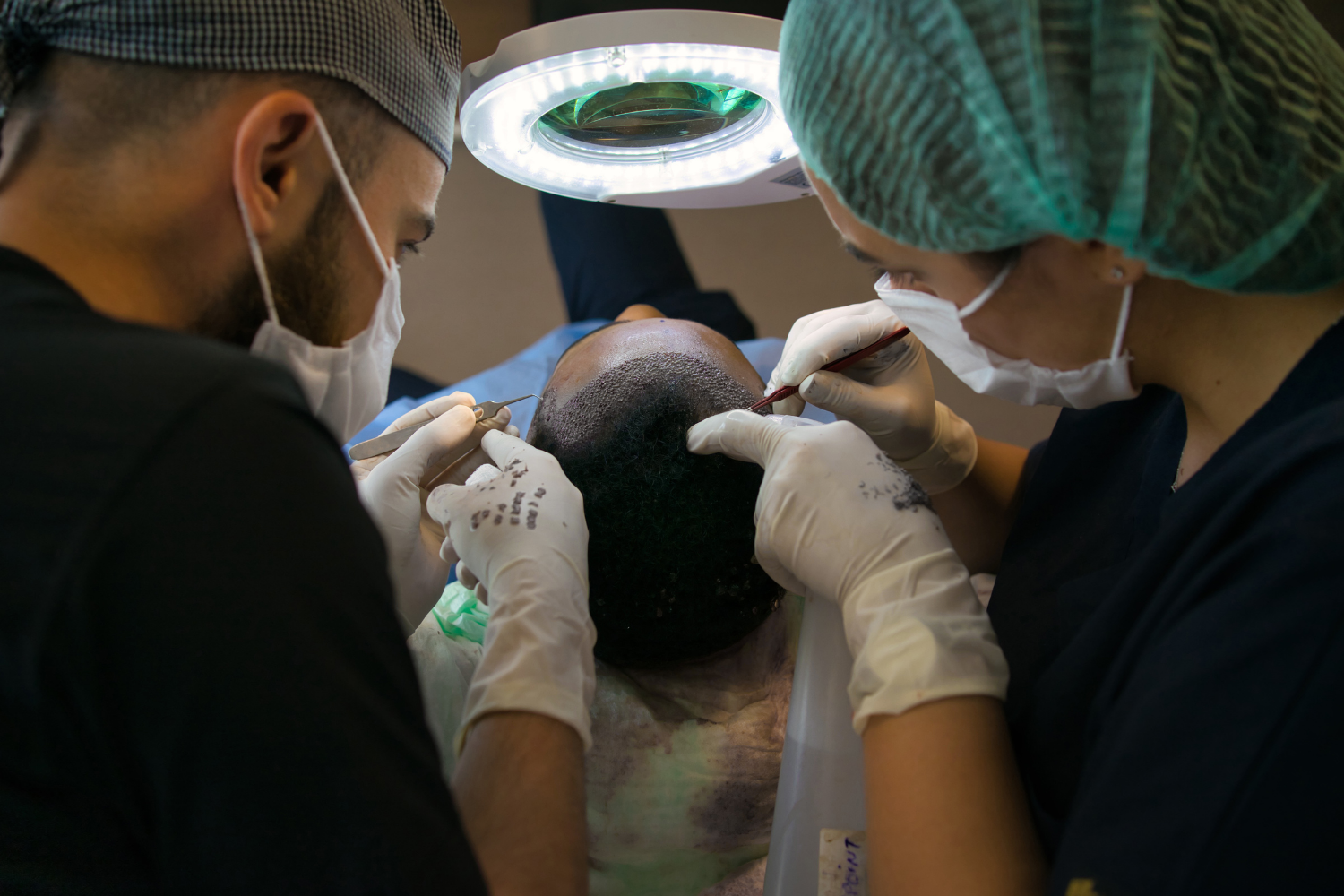
Frequently Asked Questions About FUE & DHI Hair Transplantation
What is the main difference between FUE and DHI hair transplantation?
In its simplest form, the difference lies in the transplantation method. In FUE, channels are first opened, and then hair follicles are placed into these channels. In DHI, hair follicles are directly implanted using a special pen. Both are permanent and effective methods; which one is preferred depends on the individual's hair structure.
Is FUE or DHI better?
This question is frequently asked, but there is no single answer. Because in hair transplantation, there is not a "best method," but rather the method most suitable for the individual.
If there is a large area of baldness → FUE
If a denser and more controlled transplantation is desired → DHI
The most accurate decision is made after examination.
Does DHI hair transplantation really give denser results?
Yes, especially in detailed areas such as the front hairline, the DHI method can provide a denser appearance. This is because the angle and direction control can be done more precisely during transplantation. However, it may not always be advantageous in large areas.
Does FUE hair transplantation leave scars?
No. Since there are no stitches or incisions in the FUE technique, there are no visible scars. Microscopic points are formed in the donor area, and these heal quickly. Can DHI hair transplantation be done without shaving? Yes, in most cases, DHI hair transplantation can be done without shaving or with partial shaving. Therefore, it is preferred especially by women and those who do not want to interrupt their social lives.
How long do FUE and DHI procedures take?
In both methods, the procedure time varies depending on:
The number of grafts to be transplanted
The size of the baldness
The person's hair structure.
It is usually completed in 6-8 hours.
Is there pain during hair transplantation?
No. Both FUE and DHI hair transplantation are performed under local anesthesia. No pain is felt during the procedure. There may be slight sensitivity afterwards, which passes quickly.
When do the hairs grow after FUE and DHI? The process is similar in both techniques: First month: Shock shedding may occur (this is normal). After 1 month: New hair begins to grow. 1 month: Significant change is seen. 1 month: Final result is achieved.
Is DHI hair transplantation suitable for everyone?
No. The DHI method is especially suitable for: Narrow areas
The front hairline
In cases where increased density is desired. It may not always be the ideal option for larger areas.
How many grafts are suitable for FUE hair transplantation?
The FUE technique is more advantageous for high graft numbers. Therefore, it is frequently preferred in large bald areas such as the crown and middle areas.
Is FUE or DHI more suitable for women? In women, DHI is generally preferred because: It is unshaven and does not damage existing hair. However, there is no single right method for every woman.
Will the transplanted hair fall out after hair transplantation?
The transplanted hair follicles are resistant to shedding and are permanent. However, the person's own existing hair may continue to fall out over time. Therefore, some people may consider a second session in later years.
What is the main difference between FUE and DHI hair transplantation?
In its simplest form, the difference lies in the transplantation method. In FUE, channels are first opened, and then hair follicles are placed into these channels. In DHI, hair follicles are directly implanted using a special pen. Both are permanent and effective methods; which one is preferred depends on the individual's hair structure.
Is FUE or DHI better?
This question is frequently asked, but there is no single answer. Because in hair transplantation, there is not a "best method," but rather the method most suitable for the individual.
If there is a large area of baldness → FUE
If a denser and more controlled transplantation is desired → DHI
The most accurate decision is made after examination.
Does DHI hair transplantation really give denser results?
Yes, especially in detailed areas such as the front hairline, the DHI method can provide a denser appearance. This is because the angle and direction control can be done more precisely during transplantation. However, it may not always be advantageous in large areas.
Does FUE hair transplantation leave scars?
No. Since there are no stitches or incisions in the FUE technique, there are no visible scars. Microscopic points are formed in the donor area, and these heal quickly. Can DHI hair transplantation be done without shaving? Yes, in most cases, DHI hair transplantation can be done without shaving or with partial shaving. Therefore, it is preferred especially by women and those who do not want to interrupt their social lives.
How long do FUE and DHI procedures take?
In both methods, the procedure time varies depending on:
The number of grafts to be transplanted
The size of the baldness
The person's hair structure.
It is usually completed in 6-8 hours.
Is there pain during hair transplantation?
No. Both FUE and DHI hair transplantation are performed under local anesthesia. No pain is felt during the procedure. There may be slight sensitivity afterwards, which passes quickly.
When do the hairs grow after FUE and DHI? The process is similar in both techniques: First month: Shock shedding may occur (this is normal). After 1 month: New hair begins to grow. 1 month: Significant change is seen. 1 month: Final result is achieved.
Is DHI hair transplantation suitable for everyone?
No. The DHI method is especially suitable for: Narrow areas
The front hairline
In cases where increased density is desired. It may not always be the ideal option for larger areas.
How many grafts are suitable for FUE hair transplantation?
The FUE technique is more advantageous for high graft numbers. Therefore, it is frequently preferred in large bald areas such as the crown and middle areas.
Is FUE or DHI more suitable for women? In women, DHI is generally preferred because: It is unshaven and does not damage existing hair. However, there is no single right method for every woman.
Will the transplanted hair fall out after hair transplantation?
The transplanted hair follicles are resistant to shedding and are permanent. However, the person's own existing hair may continue to fall out over time. Therefore, some people may consider a second session in later years.


